PROMPT GALLERY
3D Asset Prompt Gallery
Prompts for 3D-style assets: isometric dioramas, vinyl-toy and clay renders, papercraft templates and production sheets. Use them to make clean concept renders — then feed the best frames into image-to-3D tools like Meshy, Tripo or Rodin for real meshes.
14 curated prompts with real reference images
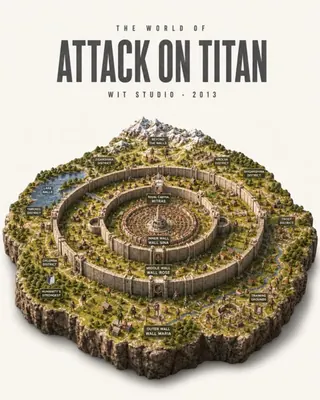
Simply replace [ANIME]:✨

(Upload a reference image of the map for enhanced accuracy)

“Ultra-detailed photorealistic isometric miniature scale-model diorama of the world from [ANIME], floating on a pure off-white studio background with a soft drop shadow beneath.

If [ANIME] has a fictional world map: the diorama takes the exact silhouette shape of that fictional continent, island or region, extruded downward into a thick slab of raw rock and earth with rough natural cliff-like edges, like the world physically cut out and lifted. The shape matches the canonical map boundary precisely.

If [ANIME] is set in a real or semi-real world: the diorama takes the exact geographic silhouette shape of the primary city, region or country where the story is set, extruded into a thick rock slab with rough cliff edges.

The entire top surface faithfully recreates the complete world of [ANIME] with full anime accuracy: every region, city, landmark, building, terrain feature, road and environment in its exact canonical position as established in the show. Every iconic location is instantly recognizable to any fan — labeled with small readable location markers. The architecture, environment design, building styles, color palette and atmosphere must be completely faithful to the visual world of [ANIME] — not Western or generic realistic, but distinctly true to how this anime world looks and feels. Every location a fan would recognize is present and accurately placed.

Dense micro-detail throughout: tiny figures in show-accurate character designs and clothing, vehicles or creatures authentic to the world, individual trees and foliage, roads and paths between locations, flags and faction symbols, any distinctive environmental features unique to this anime world.

Style: hyper-realistic tilt-shift miniature photography — extremely sharp, everything in focus, no blur. Soft warm lighting from above, gentle diffuse shadows. Colors match the anime's authentic visual palette faithfully — rich, saturated and true to the show's identity.

Layout: the shaped diorama floats centered in the lower two-thirds of the frame, clear margins on all sides, never touching the frame edges. Upper third is empty off-white space with minimalist editorial typography, centered: small wide-tracked caps with the world or region name at the very top, then [ANIME] directly below in a bold condensed sans-serif in medium charcoal grey — large and dominant, the biggest text element, then small wide-tracked caps below with the studio name and year.

Minimalist editorial poster aesthetic, premium print quality, 4:5 aspect ratio.”
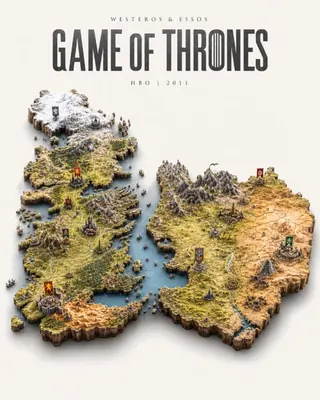
Simply replace [TV SHOW]:✨

“Ultra-detailed photorealistic isometric miniature scale-model diorama of the world from [TV SHOW], floating on a pure off-white studio background with a soft drop shadow beneath.

If [TV SHOW] has a fictional world map: the diorama takes the exact silhouette shape of that fictional continent or world, extruded downward into a thick slab of raw rock and earth with rough cliff-like edges. The top surface recreates the complete world geography exactly as established in the show — every region, kingdom, city, landmark, mountain range, forest and river in its correct canonical position.

If [TV SHOW] is set in the real world: the diorama takes the exact geographic silhouette shape of the real city, state or region where the show is primarily set, extruded into a thick rock slab. The top surface is filled entirely with locations, landmarks, routes and environments from the show rendered in the show's authentic color palette and visual atmosphere — not generic realistic geography but the world as it feels in the show.

In both cases: dense micro-detail throughout — tiny figures in show-accurate clothing, vehicles, buildings, roads, trees, all authentic to the show's world. Every iconic location a fan would recognize is present and accurately placed.

Style: hyper-realistic tilt-shift miniature photography — extremely sharp, everything in focus, no blur. Lighting and color palette match the show's visual identity exactly.

Layout: diorama floats centered in the lower two-thirds, clear margins all sides. Upper third is empty off-white space with minimalist editorial typography, centered: small wide-tracked caps with the location or world name at the very top, then [TV SHOW] in a bold condensed sans-serif in medium charcoal grey — large and dominant, then small wide-tracked caps below with network and year.

Minimalist editorial poster aesthetic, premium print quality, 4:5 aspect ratio.”
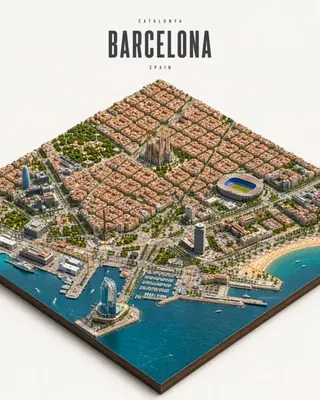
Simply replace [CITY]:✨

"Ultra-detailed photorealistic isometric miniature scale-model diorama of [CITY], presented as a thin flat square tile resting on a pure off-white seamless studio background. The tile is a clean, precisely cut square slab with straight vertical edges revealing a thin band of dark wood/earth material along the sides — like a professionally built architectural model mounted on a display base. The tile is rotated so it reads as a diamond in perspective, viewed from a high isometric angle of roughly 45–50° looking down, with the front corner of the slab pointing toward the lower part of the frame.

The entire top surface is filled edge to edge with a meticulously accurate miniature recreation of the city's real urban fabric: the actual street grid and road layout, real residential blocks with correct local architecture and rooftop materials, the city's most recognizable landmarks in their true relative positions and true-to-life scale (never exaggerated), plazas, parks, tree-lined boulevards, rivers or coastline if the city has them, bridges, and any major stadium or arena. Include dense micro-detail: individual parked cars, moving traffic, buses, tiny pedestrians in plazas, street lamps, awnings, rooftop AC units, construction cranes, parking lots with rows of cars, boats in water if applicable. Every tree is individually modeled. Roads show painted lane markings and crosswalks.

Rendering style: hyper-realistic tilt-shift miniature photography look — extremely sharp, high resolution, everything in focus across the whole tile, no blur. Bright, soft, even daylight studio lighting from above with gentle diffuse shadows, no harsh contrast, no dramatic side lighting. Natural saturated color: green pitches and parks, terracotta and stone rooftops, blue water, grey asphalt. Clean and premium.

Layout: the diorama occupies the lower two-thirds of the frame. The upper third is empty off-white negative space containing minimalist editorial typography, centered and small relative to the frame: a small line of wide-tracked small caps at the very top, then directly below the city name in a bold condensed sans-serif display font in dark charcoal grey (large but not full-bleed — restrained), then a line of small wide-tracked small caps below that with a short subtitle or region name. Generous white space between the typography block and the top edge of the diorama.

Minimalist editorial poster aesthetic, premium print quality, 4:5 aspect ratio."
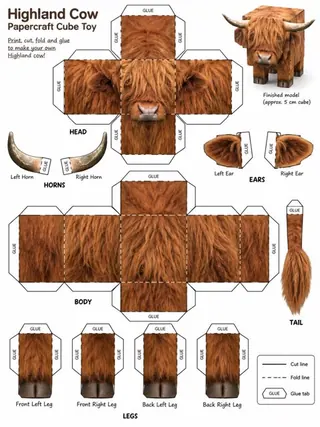
Use my uploaded pet photo as the only source of the animal’s appearance. Create a realistic printable papercraft cube toy template of my pet, preserving 100% its identity and unique features: fur color, fur pattern, eyes, face shape, ears, body proportions, markings and expression.

Transform my pet into a handmade paper craft 3D model (low-poly cube style) like a DIY papercraft template. Show the unfolded cut-out template pieces laid flat on a white background: head, body, legs, ears and tail separated, with folding lines, tabs and cutting edges clearly visible.

The printed texture on the paper pieces must use my pet’s real fur texture and colors, so when assembled it becomes a small cube-shaped 3D figure of my exact pet.

Include:

cube-shaped head with my pet’s real face on it

cube-shaped body with realistic fur texture

four legs matching my pet’s appearance

ears with correct shape and inner ear details

tail matching my pet’s size and color pattern

Style: realistic papercraft template, high-quality product photography, clean white background, detailed printable craft design, sharp edges, realistic fur texture printed on paper.

Do not change my pet’s appearance. Do not turn it into a different animal, cartoon, plush toy or generic cat/dog. It must look like my actual pet converted into a cube papercraft model
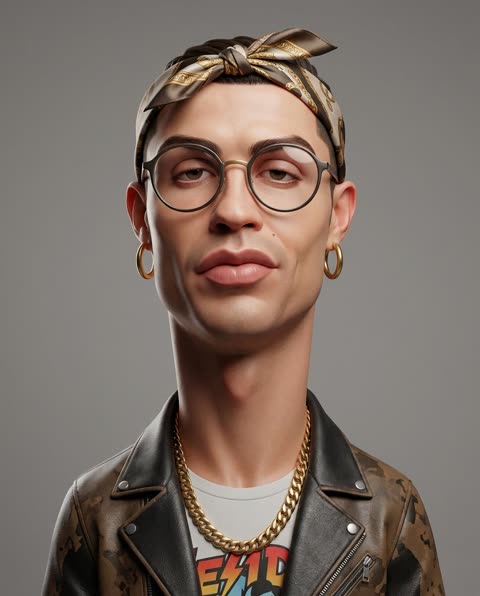
Create an exaggerated stylized 3D caricature character portrait with strong intentional deformation and a clean, controlled surface finish. Use the person from the ATTACHED REFERENCE PHOTO. Preserve the subject’s identity, facial likeness, skin tone, and defining features, but reinterpret them into a bold caricatured 3D form with an elongated neck, oversized head-to-neck ratio, droopy eyelids, heavy lips, and slightly asymmetrical facial structure.Render as a human-like 3D character with smooth, studio-clean skin and intentionally designed detail, avoiding random texture or noise. Style with bold accessories such as round or oval glasses, hoop earrings, gold chains, headscarves or bandanas, and street-luxury clothing.

Use neutral studio lighting with soft shadows and even illumination, no dramatic contrast, against a plain neutral grey or off-white background. The overall aesthetic should feel weird, fashion-forward, collectible, and character-driven rather than cute or realistic.

Ultra high definition, premium cinematic 3D render quality, hyper-realistic hyper realism, clean materials, no freckles, no dirt, no grain, no noise, no speckling, no text, no logos, no watermarks.

Aspect ratio 4:5.
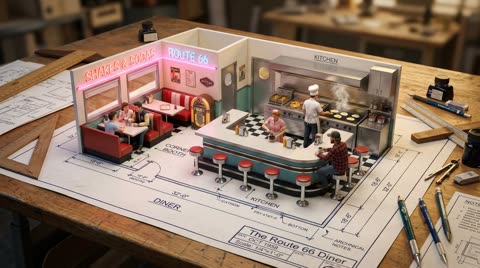
Prompt Studio: Architectural Floor Plan with Nano Banana 2 in Firefly

An architectural floor plan of {BUILDING_TYPE} spread across a drafting table, with the spaces rising into inhabitable miniature. {ROOM_1} emerges with {FURNITURE_1} and {ACTIVITY_1} in progress, {ROOM_2} rises with {DESIGN_ELEMENT} and {HUMAN_MOMENT}, {ROOM_3} pushes up with {DETAIL_1} and {LIGHTING_1}. Walls exist as both lines and actual partitions simultaneously. Sight lines marked on the plan become actual views between spaces. The mechanical systems in the plan, HVAC, plumbing, electrical, pulse with invisible function. Human circulation patterns appear as ghosted movement trails. Architectural scale figures become actual tiny inhabitants living their tiny lives. Section cuts reveal vertical relationships. The architect's tools surround: scales, pencils, trace paper. Golden design studio light, the plan as promise and proof, 8K, architecture as life container.

Check ALTs for ideas 👇
@AdobeFirefly
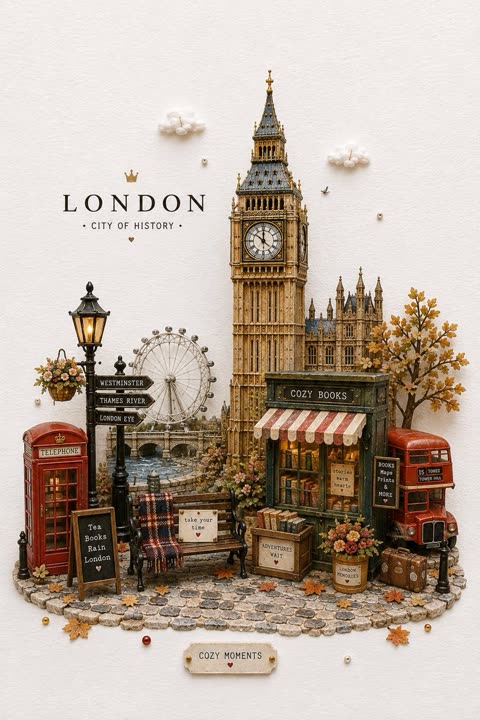
Create a whimsical handcrafted miniature diorama featuring [ICONIC STRUCTURE] as the main focal point. Place the structure in a cozy, highly detailed tiny world with miniature streets, trees, flowers, lamps, benches, small shops, seasonal decorations and subtle objects that represent the location. Use a soft warm color palette, realistic handmade textures, tiny imperfections, paper-craft and clay-like details. Everything should feel physically miniature and lovingly hand-built. Set the entire scene against a clean white textured paper background with generous negative space. Add small elegant typography reading “[CITY / COUNTRY]” and a few tiny location-inspired signs. Soft diffused studio lighting, gentle shadows, charming storybook atmosphere, premium collectible miniature art, highly detailed, vertical 4:5 composition, no people, no photorealistic background.
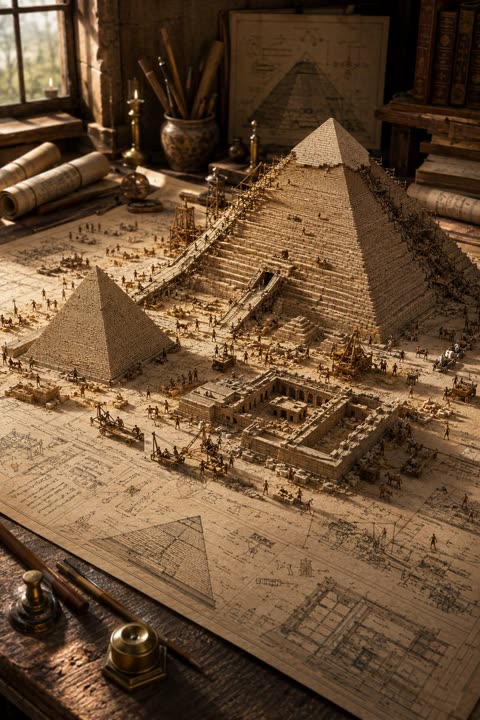
A highly detailed miniature diorama of an ancient civilization under construction, displayed directly on top of large rolled-out architectural blueprints spread across a realistic wooden drafting table. The scene features iconic historical architecture from [CIVILIZATION OR LOCATION], including partially completed monuments, temples, towers, walls, palaces, streets, or ceremonial structures at different stages of construction. Tiny craftsmen, builders, engineers, and workers interact naturally throughout the scene using historically accurate tools, scaffolding, ramps, cranes, carts, stone blocks, timber frameworks, and construction platforms.
The miniature terrain blends seamlessly into the printed engineering drawings beneath, combining realistic sand, stone, earth, marble, vegetation, or desert textures with visible architectural floor plans, elevation sketches, measurements, annotations, and cross-sections. Surrounding the workspace are drafting instruments, compasses, rolled parchment plans, books, rulers, brass weights, candles, maps, carving tools, and historical reference materials that enhance the workshop atmosphere.
Soft cinematic lighting with warm natural sunlight from a nearby window, shallow depth of field, ultra realistic textures, handcrafted museum-quality scale model aesthetic, intricate miniature detailing, photoreal materials, atmospheric realism, editorial architectural photography style, clean composition, immersive world-building, vertical composition, extremely high detail, realistic shadows, authentic historical mood.
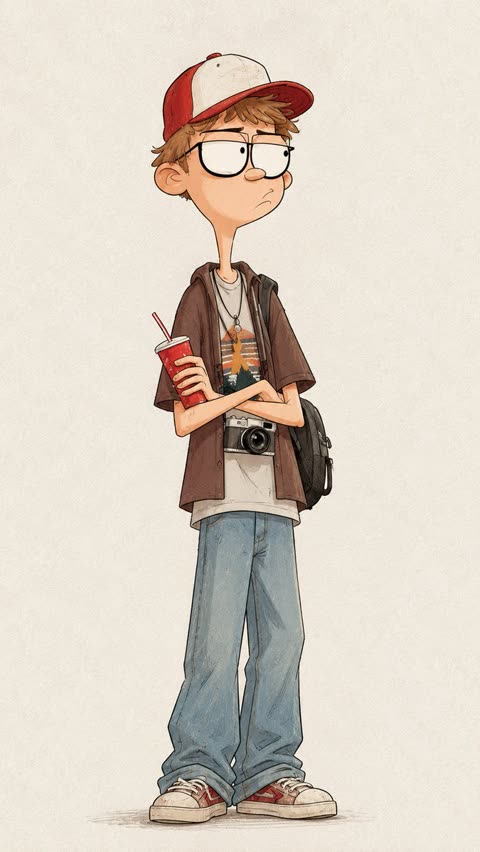
Create a highly detailed, hand-drawn 2D cartoon character illustration in a charming, nostalgic animated movie style.

Character: A quirky, slim teenage boy with an oversized head, a long narrow neck, slightly messy light brown hair, large rectangular black-framed glasses, a small nose, and a subtle awkward expression. His eyes are wide and slightly looking to the side, giving him a thoughtful, curious personality.

Outfit: A vintage red and cream baseball cap, oversized brown short-sleeve shirt worn open over a light grey graphic T-shirt, faded blue jeans, and a casual backpack. A small vintage camera hangs around his neck. He holds a red takeaway soda cup with a straw in one hand while casually crossing his arms.

Art Style: Beautiful hand-drawn 2D animation, expressive cartoon anatomy, slightly exaggerated proportions, delicate sketchy black outlines, soft watercolor textures, subtle colored pencil shading, imperfect hand-painted details, warm muted colors, and a nostalgic illustrated storybook aesthetic.

Background: Minimal plain warm ivory textured paper background with subtle grain, no distracting elements.

Composition: Full-body vertical character portrait, character standing naturally in the center, relaxed posture, entire outfit visible, generous negative space around the character.

Lighting and Texture: Soft natural lighting, gentle shadows, matte paper texture, slightly imperfect traditional illustration finish.

Aspect Ratio: 9:16 portrait.

Quality: Extremely detailed character design, polished traditional 2D animation illustration, consistent anatomy, beautiful facial expression, no photorealism, no 3D rendering, no text, no watermark.
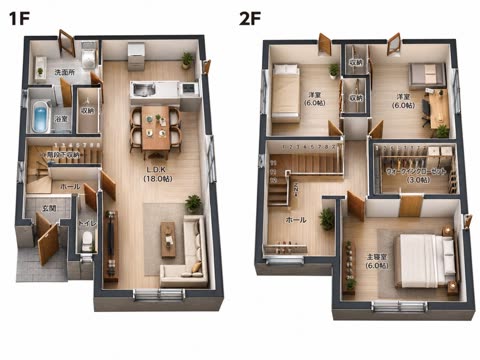
Using the provided floor plan reference image, convert the 2D black-and-white architectural plan into a clean photorealistic 3D isometric real-estate floor plan render while preserving the original layout, room sizes, labels, and the side-by-side composition of the 1F and 2F plans. Add realistic wall thickness, light wood flooring, soft neutral wall colors, doors and windows with depth, and fully furnished interiors appropriate to each room. Keep all visible Japanese room labels in place, including 1F, 2F, 洗面所, 浴室, 収納, 階段下収納, ホール, 玄関, トイレ, L.D.K (18.0帖), 洋室 (6.0帖) for 2 rooms, ウォークインクローゼット (3.0帖), and 主寝室 (6.0帖). Stage the 1F with 1 kitchen, 1 dining table set for 4, 1 living area with sofa and coffee table, 1 toilet, 1 bathroom with tub, 1 wash area, and small plants. Stage the 2F with 3 sleeping/work rooms total: 1 bedroom with a single bed, 1 room with a desk and chair, and 1 master bedroom with a double bed, plus 2 storage spaces and 1 walk-in closet with shelving. Use a bright catalog-style presentation on a plain light background, viewed from a slightly elevated angled top-down perspective, suitable for a property sales brochure.

Create a modern isometric illustration sheet on a clean light gray background, showing a seamless grid of cybersecurity, privacy, and compliance icons with soft shadows, glossy 3D materials, rounded edges, and a blue, white, gray, red, and orange accent palette. Use a wide horizontal canvas, evenly spaced rows and columns, with no border or watermark. Include exactly 15 discrete icons arranged in a 3-row by 5-column grid: top row: 1) a blue padlock with silver shackle and black keyhole, 2) a blue shield badge with a white check mark and metallic rim, 3) a silver key angled diagonally, 4) a dark smartphone-like biometric panel showing a glowing blue fingerprint scan line, 5) a desktop monitor login screen with a lock icon, password dots, and a blue button labeled “LOGIN”; middle row: 6) a white document page with folded corner, blue lock icon, and label “ENCRYPTED”, 7) a red brick firewall with an orange flame in front, 8) a white surveillance camera with blue lens mounted on a small wall bracket, 9) an ID badge with clip, portrait thumbnail, text lines, and barcode, 10) a red triangular warning sign with black exclamation mark; bottom row: 11) a dark server stack with colored status lights and a blue shield check badge in front, 12) a clipboard checklist labeled “COMPLIANCE” with green checkboxes, 13) a dark smartphone facial-recognition screen showing a wireframe face, scan brackets, and “VERIFYING...” text, 14) an alert dashboard card labeled “ALERT” with a magnifying glass inspecting the list, 15) a gray safe/vault box with round combination dial beside a white policy document labeled “POLICY” with gray lines and green check mark. Keep all icons consistent in isometric perspective, miniature object scale, polished SaaS/security branding style, crisp edges, ambient occlusion, and subtle contact shadows. Text should be minimal and legible only where specified. Theme customization: security and compliance; primary color customization: deep blue; background customization: light gray.
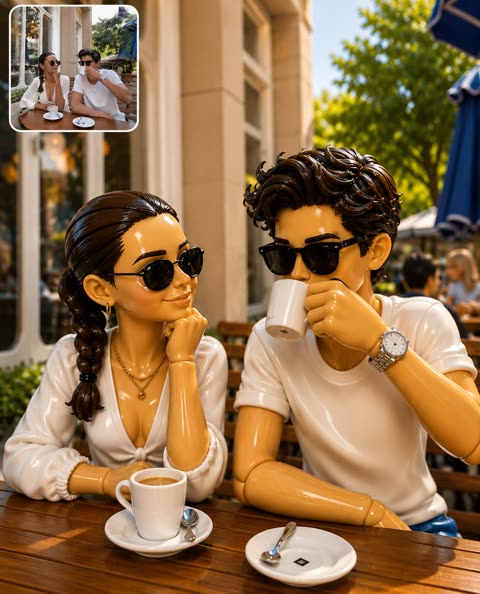
Create a highly detailed 3D collectible toy diorama of a stylish young couple sitting at an outdoor café table, inspired by a real-life reference photo. Transform both people into premium designer vinyl figures with smooth glossy plastic surfaces, articulated toy-joint details, oversized expressive eyes, realistic facial features, and fashionable outfits.

The female figure has dark braided hair, black sunglasses, gold earrings, layered gold necklaces, and a white V-neck blouse. She rests her chin on her hand while smiling at her companion. The male figure has thick wavy dark hair, black sunglasses, a white t-shirt, and a silver wristwatch while drinking coffee from a white ceramic cup.

Both figures sit at a wooden café table with coffee cups, saucers, and spoons. The setting is an elegant European-style outdoor café with warm beige architecture, large windows, blue umbrellas, lush green trees, and softly blurred background guests.

Style: Pixar-inspired collectible toy, premium vinyl figure, designer toy aesthetic, ultra-realistic 3D render, glossy plastic texture, toy photography, shallow depth of field, cinematic lighting, warm golden-hour sunlight, photorealistic materials, high-end commercial product photography, sharp focus, ultra detailed, 8K resolution.

Composition: Front-facing medium shot, both characters centered, natural poses, café ambiance, depth and realism, professional advertisement quality.

Render Quality: Octane Render, Unreal Engine 5, ray tracing, global illumination, realistic reflections, HDR lighting, highly detailed textures, collectible figurine showcase.
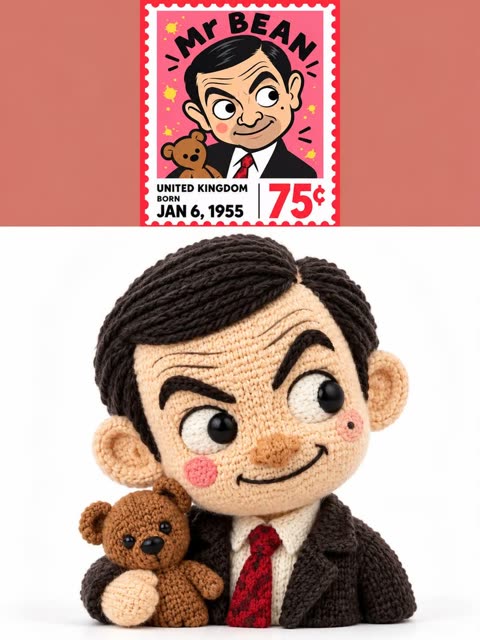
Transform your photo into a 3D handmade knitted plush doll with GPT Image 2.5

Prompt: Transform a Real Photograph into a 3D Handmade Knitted Plush Doll Comparison Poster

Use the uploaded real photograph as the exclusive reference for the person's identity. Automatically analyze the person's facial shape, hairstyle, hair color, expression, clothing, accessories, and pose, then transform them into a cute, intricately crafted 3D handmade knitted plush doll. Create a vertical comparison poster featuring the original photograph on top and the finished knitted doll below.

01 | Layout and Composition

Use a 3:4 portrait aspect ratio, divided into two vertically stacked sections.

Upper 25% — Original Photograph

- Preserve the original photograph's authentic photographic quality, facial features, expression, clothing, and pose.
- Center the photograph and maintain its original aspect ratio. Natural cropping is permitted when necessary.
- Fill the areas on the left and right with a soft terracotta-pink color ("#D97B70").
- Do not redraw, distort, beautify, retouch, or otherwise alter the original photograph.

Lower 75% — 3D Knitted Plush Doll

- Use a pure white, seamless studio background.
- Center the doll in a bust or half-body close-up composition.
- Give the doll a large, full head with a clearly defined silhouette and moderate surrounding negative space.
- Make the two sections meet directly, without divider lines, outer frames, titles, or text.

02 | Character Design

Use exaggerated proportions with an oversized head and a tiny body. The head should occupy approximately 55–65% of the doll's visible height.

The face should be broad, plump, and softly rounded, with a rounded-square shape. The body should be small, with short, rounded limbs and the proportions of an adorable collectible designer toy.

Simplify the facial features:

- Tiny black oval bead eyes.
- A dimensional orange-brown fabric nose.
- A simple, natural mouth shape.
- Soft, pale pink blush on the cheeks.

Recreate the person's original expression, whether smiling, surprised, calm, or otherwise, while preserving their distinctive identity and personality.

03 | Materials and Yarn Details

Construct the face and body from fine, soft knitted fabric, with visible textile patterns, gentle stuffed volume, and delicate fiber details.

Create the hair entirely from sculpted yarn. Automatically reproduce the hairstyle from the original photograph, including:

- Hairstyle, hair color, length, and parting.
- Straight, curly, short, or long hair, as applicable.
- Yarn thickness, curl patterns, and layered volume.

Each hair section should display realistic yarn fibers and dimensional knitted structures.

Reinterpret clothing, hats, glasses, and other accessories using handmade knitting or textile-craft techniques. Preserve their original styles, colors, silhouettes, and recognizable details.

Only include elements that are actually visible in the source photograph.

04 | Identity and Pose Preservation

Preserve the person's defining characteristics from the original photograph, including hairstyle, accessories, clothing colors, facial expression, head angle, and primary gestures.

The doll's pose must correspond to the original person's pose. Reproduce visible hands naturally and maintain the correct number of fingers wherever they are clearly visible.

Do not invent or add hats, glasses, jewelry, accessories, or other objects that are absent from the photograph.

Maintain the relationship between the original person and the knitted doll so that the doll is immediately recognizable as a handcrafted textile interpretation of the same subject.

05 | Photography and Lighting

Use the premium product-photography aesthetic of a high-end designer collectible plush doll.

- Pure white background.
- Soft, even studio lighting.
- Natural contact shadows.
- Subtle dimensional depth and realistic fabric volume.
- An 85mm portrait-lens aesthetic.
- High-resolution macro-level textile details.
- Authentic handmade materials with clean, soft colors.

The knitted doll should look like a tangible, physically crafted object that could exist in the real world, not a conventional computer-generated character.

Emphasize the tactile qualities of the yarn, fine stitches, fabric fibers, soft stuffing, and carefully constructed facial features.

06 | Negative Constraints

Do not alter the original photograph in the upper section. Do not regenerate the real person or modify their appearance.

Avoid:

- Plastic materials or smooth, synthetic 3D skin.
- Photorealistic human facial features.
- Oversized anime eyes.
- Flat cartoon illustrations or conventional animated-character aesthetics.
- Exaggerated noses or mouths.
- Complex backgrounds.
- Additional people, body parts, or limbs.
- Incorrect finger counts or malformed hands.
- Invented accessories or props.
- Text, logos, watermarks, decorative borders, or unnecessary embellishments.

Final Output

Create a polished 3:4 portrait comparison poster with a clear visual contrast between the original photograph and its knitted interpretation.

The upper section must display the untouched original photograph. The lower section must feature a corresponding, adorable 3D handmade knitted plush doll whose hairstyle, clothing, expression, and pose closely match the original person.

Core objective: Preserve the real person's identity while translating their appearance into a beautifully crafted, tactile, oversized-head knitted collectible doll. The result should feel like professional product photography of an actual handmade textile art toy.
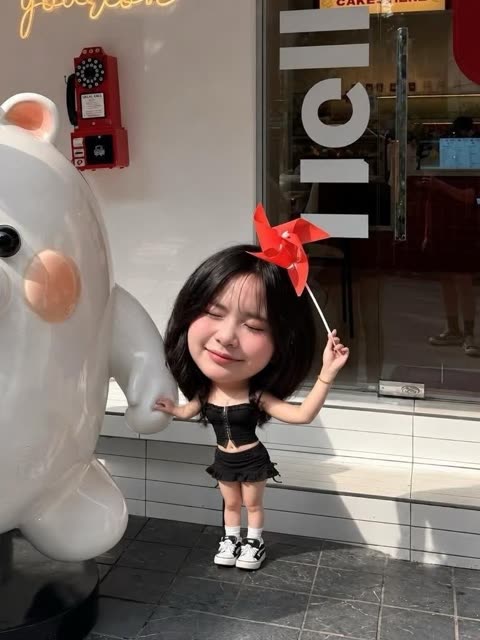
Turn any image into realistic chibi-style portrait using Chat GPT Image 2.5

Prompt: Task: Strictly edit the uploaded original photograph to transform the person or animal into a hyper-realistic, extremely exaggerated big-head miniature figure, matching the visual style of the provided reference image.

Highest Priority: Transform the head-to-body proportions while preserving the subject's recognizable identity, natural facial features, original expression, hairstyle, clothing, accessories, pose, and overall photographic realism. The final result must resemble a real photograph, not a cartoon or CGI creation.

1. Head-to-Body Proportions (Highest Priority)

- Giant Head: Dramatically enlarge the entire head, including hair, hats, ears, and other existing head accessories. The head should dominate the figure, occupying approximately 65–75% of the total visible silhouette height in a full-body composition.
- Extremely Narrow Shoulders: Reduce shoulder width to approximately 40–50% of the head width. Create a tiny neck and narrow shoulder structure that transitions naturally into the miniature torso.
- Miniature Body: Compress the torso, waist, hips, and limbs into an extremely small body beneath the oversized head. The torso should be short and narrow, with realistic anatomical connections.
- Miniature Arms and Hands: Reduce the arms, palms, and fingers proportionally. Keep the arms naturally close to the body, preserving the original gestures and hand positions.
- Tiny Legs and Feet: Dramatically shorten and narrow the legs, feet, and shoes while preserving the original stance, footwear design, and points of contact with the ground.
- Strong Proportional Contrast: The head must be unmistakably oversized relative to the tiny body. Preserve the subject's original clothing design while naturally adapting its fit to the miniature proportions.

The transformation must create an extreme, visually striking big-head miniature effect without making the subject look like a toy, doll, or digitally assembled figure.

2. Pose and Actions (Strictly Preserve)

Preserve the original subject's exact pose, body orientation, gestures, facial expression, gaze direction, and interactions with the environment.

- If standing, keep the subject standing in the same position.
- If sitting, crouching, leaning, kneeling, or lying down, preserve that exact posture.
- Retain the original hand positions, held objects, arm placement, leg orientation, and contact points.
- Maintain the original head tilt and gaze direction unless a slight anatomical adjustment is necessary for a seamless transformation.
- Keep the subject's original framing. For full-body photographs, preserve the entire figure. For selfies, close-ups, and partial-body images, do not invent missing body parts or expand the frame unnecessarily.

The miniature body must adapt to the original pose rather than forcing the subject into a new pose.

3. Facial Features, Hair, and Clothing (Fully Preserve)

- Identity: Preserve the same recognizable person or animal from the original image. Do not replace, reinterpret, or redesign the subject.
- Face: Retain the original facial structure, eye shape, nose, lips, cheeks, skin tone, expression, and natural facial proportions. Do not apply beauty filters, artificial eye enlargement, face reshaping, or excessive skin smoothing.
- Hair: Preserve the original hairstyle, hair color, hairline, texture, volume, and distinctive strands. Scale the hair naturally with the enlarged head.
- Clothing: Preserve the exact original garments, colors, materials, prints, patterns, logos, folds, and textures. Adapt their dimensions to fit the miniature body without changing their design.
- Accessories: Retain all original jewelry, glasses, hats, bags, watches, and other visible accessories, resizing them only when necessary to fit the transformed proportions.
- Animals: Preserve the original species, recognizable features, fur patterns, ears, eyes, and expression. Apply the same oversized-head and miniature-body transformation without changing the animal's identity.

4. Scene and Composition (Fully Preserve)

Use the uploaded photograph as the sole reference for the subject and environment.

- Preserve the original background, architecture, furniture, plants, ground surface, and environmental objects.
- Maintain the original camera angle, perspective, framing, subject placement, composition, and aspect ratio.
- Keep the surrounding environment at its original scale. The subject's altered proportions should create a striking contrast with the realistic environment.
- Preserve the original lighting direction, color tones, shadows, reflections, and depth of field.
- Ensure the miniature figure remains naturally grounded in the scene, with realistic contact shadows beneath the feet and physically consistent lighting across the enlarged head and reduced body.
- Do not remove, replace, or introduce environmental elements unless a minor reconstruction is essential to repair an editing artifact.

5. Photographic Realism and Visual Quality

The entire image must retain the appearance of an authentic, high-resolution photograph.

- Realistic skin pores, fine facial details, and natural skin texture.
- Individual hair strands with believable highlights and shadows.
- Authentic fabric weave, clothing folds, and accessory details.
- Natural lighting, physically accurate shadows, and consistent reflections.
- Seamless transitions between the enlarged head, neck, and miniature body.
- Realistic anatomy, natural edges, and coherent perspective.
- Subtle photographic imperfections consistent with the original image.

The oversized head must remain fully photorealistic, with the original person's natural facial anatomy and expression intact. The miniature body must look like a physically plausible part of the same person.

6. Strictly Prohibited

- Cartoon, anime, illustration, or stylized 3D figurine aesthetics.
- Plastic skin, toy-like materials, doll faces, or artificial beauty enhancements.
- Changing the subject's identity, facial features, expression, hairstyle, or clothing design.
- Normal adult shoulder width or a body that appears too large relative to the head.
- Oversized hands, fingers, feet, or shoes.
- Disconnected heads, visible neck seams, floating limbs, malformed joints, or duplicated body parts.
- Altered poses, invented gestures, or changed interactions with the environment.
- Unnecessary background replacement, camera-angle changes, or aspect-ratio changes.
- Unnatural shadows, inconsistent lighting, visible compositing artifacts, text, watermarks, or interface elements.

Final Output

Transform the original photograph into an ultra-photorealistic big-head miniature portrait with a dramatically enlarged head, extremely narrow shoulders, a tiny compressed body, and proportionally miniature limbs.

Preserve the original subject's identity, expression, pose, clothing, accessories, background, and photographic characteristics as faithfully as possible. The exaggerated head-to-body ratio should be the defining visual transformation, producing the same realistic, charming, oversized-head aesthetic as the reference image.

Editing Rule: Change the subject's proportions only. Preserve everything else from the original photograph.
Frequently asked questions
Do these prompts generate real 3D files?
Not directly — they produce 3D-styled images (isometric, clay, vinyl-toy, render passes). For an actual mesh, run the result through an image-to-3D tool such as Meshy, Tripo3D or Rodin. Clean single-subject frames with even lighting convert best.
Which renders convert best to meshes?
Single object on a plain background, front or three-quarter view, no text, no strong depth of field. Prompts marked “reference sheet” or “production sheet” give the multi-angle views reconstruction tools prefer.
How do I get game-ready or print-ready output?
Add topology language to the prompt — “low-poly, clean topology, flat shaded” for games, “watertight, single shell, no floating parts” for 3D printing. Then convert with a tool that exposes poly-count and export formats (GLB/USDZ/OBJ/STL).
Where do these prompts come from?
They are curated from public prompt showcases — mostly GPT Image and Nano Banana communities — each card links back to the original post. Use them as starting points and restate the subject in your own words for production work.